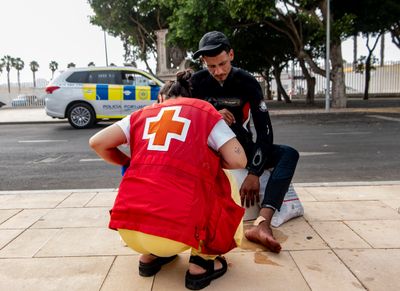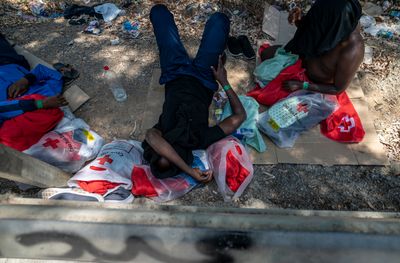

Ceuta, Spain- Most migrants want to return to their home country because they “have nowhere to sleep, have gone three days without food and supermarkets remain closed”
El Tarajal, a beach located at the southern tip of the Spanish autonomous city of Ceuta, on the border with Morocco, has become the main focal point for tens of thousands of arrivals from the neighbouring country in recent days, particularly yesterday and today. Around 200 people were arriving every minute yesterday, while today the figure has fallen to approximately 150 arrivals every 60 seconds.
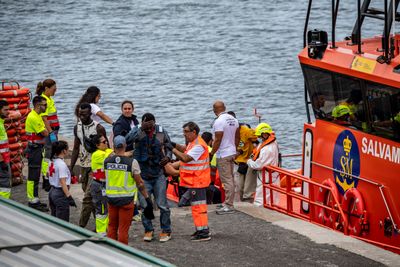
Although the number of undocumented migrants has dropped from 50,000 to 1,700, according to government sources, hundreds of Moroccan, Nigerian and sub-Saharan migrants continue to reach Ceuta by swimming across the border. The route has changed: instead of crossing on foot, they now enter the water from the Moroccan side, swim around a breakwater and cover approximately four kilometres before reaching the Spanish territory. Upon arrival, they are met by military cordons attempting to prevent further crossings.
Not everyone makes it to shore. The death toll has risen to 57 migrants who have died while attempting to reach Ceuta. Many of those who do arrive, however, say they want to return to Morocco as soon as possible, claiming that they “have nowhere to sleep, have gone days without food and supermarkets remain closed.”
The mood varies between those who have been in Ceuta for several days and those who have only just arrived. Migrants who have already spent time in the city express disappointment over the lack of available resources and insist that they want to return to Morocco. Those who have only just reached the shore, their clothes still soaked, appear far more hopeful. Several can be heard shouting, “Long live Spain!”, while raising their arms or making the peace sign with their hands. Some admit they decided to make the journey after hearing about it from friends, hoping to build a better future. “To work,” is the answer most frequently given when asked what brought them to the Spanish side of El Tarajal.
Although tensions with local residents are frequent, some migrants say they would prefer to remain in Spain. For the vast majority, however, Ceuta is merely “a transit city.”
Article by Daniel Chamizo and Gemma Barra.