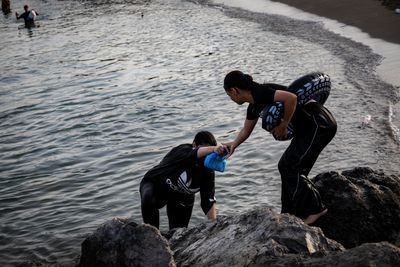

Ceuta, Spain— Spain's North African enclave of Ceuta is facing a renewed surge in irregular migration that has pushed its migrant reception system close to capacity, prompted calls for changes to immigration legislation and intensified pressure on security forces patrolling one of the European Union's external borders.
Ceuta, together with the neighbouring Spanish enclave of Melilla, is the EU's only land border with Africa. The territory, located on Morocco's Mediterranean coast, has long been a key entry point for migrants attempting to reach Europe by swimming around border breakwaters, scaling the six-metre border fences or hiding in vehicles crossing from Morocco.
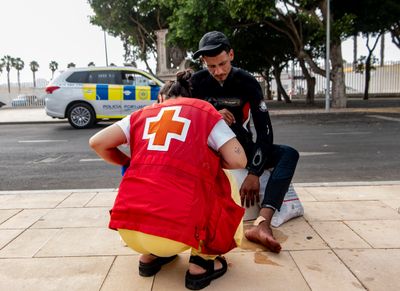
In recent days, dozens of newly arrived migrants have been forced to sleep outside the Temporary Migrant Reception Centre (CETI), the Spanish government's first reception facility in Ceuta, after the number of arrivals exceeded the available accommodation. The Spanish Red Cross has been providing water, clothing and basic humanitarian assistance while migrants wait for places to become available.
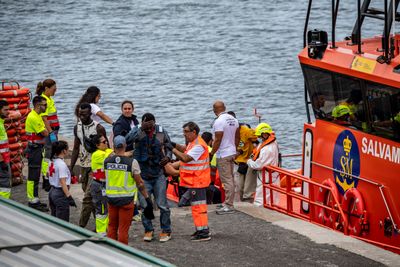
The latest increase in arrivals coincided with the recovery of several bodies from waters off Ceuta, underlining the human cost of attempts to reach European territory through one of the most dangerous migration routes in the western Mediterranean.
Most of the recent arrivals are Moroccan nationals who entered by sea, although Sudanese nationals fleeing the civil war are also among those reaching the enclave to seek international protection.
The pressure is also affecting Spain's child protection system. According to the regional government of Ceuta, around 400 unaccompanied migrant children have arrived in the city during July alone, once again placing reception facilities under severe strain.
The increase comes only months after Spain activated an extraordinary nationwide relocation mechanism to transfer unaccompanied migrant children from Ceuta and the Canary Islands to other regions. The measure was designed to relieve the chronic overcrowding affecting Spain's two main migration hotspots at the EU's southern border.
Regional authorities have warned that emergency accommodation facilities closed after those transfers may have to reopen if arrivals continue at the current pace.
Despite the growing pressure, 133 migrants left the CETI between Wednesday and Saturday for reception centres across mainland Spain, where they will continue asylum procedures or enter Spain's national reception system.
The migration surge has also reignited a political debate over Spain's immigration legislation. The government of Ceuta supports a proposal by the opposition People's Party (PP) to amend the Immigration Law so that the special border return regime, currently applied mainly to attempts to cross the land border fences, could also be used against migrants arriving by sea. The proposal follows a recent Spanish Supreme Court ruling that raised legal questions over such returns.
Spain's central government delegation in Ceuta said it had activated all established procedures to manage the increased migratory pressure. Government delegate Miguel Ángel Pérez Triano expressed sorrow over the recent loss of life, called for stronger action against human smuggling networks and praised the work of Spain's National police and Civil Guard in protecting the border and carrying out maritime rescue operations.
The opposition Socialist Party (PSOE) in Ceuta called for institutional unity and political cooperation, arguing that migration should be addressed through coordinated policies rather than political confrontation. It also backed Spain's security forces and said any reform of immigration legislation must balance effective border management with legal certainty for officers and respect for fundamental rights.
Meanwhile, the Unified Association of Civil Guards (AUGC), the country's largest Civil Guard representative organisation, called for more personnel and equipment at the Ceuta border, arguing that officers are increasingly exposed to danger as migration pressure rises. The association renewed its demand for the Civil Guard to be formally recognised as a high-risk profession after one officer was injured during an operation to prevent an irregular border crossing.