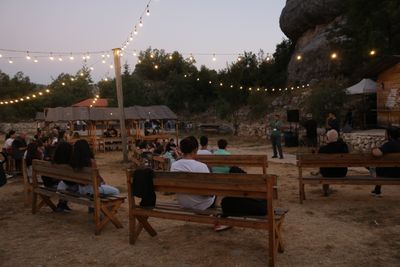


Beirut, Lebanon - There was no countdown. No official signal. Just one woman standing in Martyrs' Square who suddenly pointed down the road and shouted, “The bus is coming!”. Within seconds, dozens of people broke into a sprint.
Backpacks bounced, children pulled their parents by the hand, friends laughed as they tried to outrun one another and strangers squeezed through the crowd, hoping to claim a seat before the doors closed. Those who made it on celebrated their victory. Those who didn't waited for the next bus, already laughing at the scene they had just witnessed.
That was how La Nuit des Musées (Night of Museums) 2026 began. For one evening, museums across Lebanon opened their doors, free of charge from 5 p.m. until 11 p.m., welcoming thousands of visitors as part of the Ministry of Culture's annual initiative in partnership with the European Union. More than 30 museums, archaeological sites, and cultural institutions participated this year, spreading the experience from Akkar in the north to Baalbek in the east and Tyre in the south. Free shuttle buses connected Beirut’s museums together, turning the city felt into one continuous cultural route.
The museums were the destination. The journey between them became a story of its own.
A bus full of strangers
Inside the bus, conversations began before it even left Martyrs' Square. “Have you ever been to Beit Beirut?” “You have to see the National Museum.” “Is MIM worth it?” “I heard Villa Audi is beautiful.”
People exchanged recommendations as though they had known each other for years instead of minutes. Every available seat disappeared instantly. Those who couldn't find one stood shoulder to shoulder for the entire ride, happy simply to be part of the experience. The atmosphere felt remarkably familiar: less like public transportation and more like a school field trip.
As the bus pulled away from Martyrs' Square, Beirut's traffic faded into the background as the city rediscovered its museums together. That sense of togetherness is exactly what the Ministry of Culture hoped to revive after bringing Museum Night back last year following a six-year hiatus.
“The numbers were crazy,” said Nadim Choueiri, a member of the Minister of Culture's cabinet. “More than 20,000 people visited museums across Lebanon. It showed us that people are still very thirsty for culture.”
This year's edition expanded significantly. Around 14 museums participated last year. In 2026, that number more than doubled, extending beyond Beirut to nearly every region of the country. “All regions are covered this year,” Choueiri explained. “The museums are telling people: we want you here. The museum exists because of its people.”
Where every stop tells a different story
The first stop was ‘Beit Beirut’, where visitors stepped inside the former Green Line landmark that now preserves memories of the Lebanese Civil War while hosting contemporary exhibitions.
Its halls were alive with conversations surrounding Hkeeli: Ya Jnoub, an exhibition whose title carried even greater weight this year as Lebanon continues to face daily bombings and occupation in its south. Visitors moved through the installations, discussing memories, asking questions and sharing their own stories. Minutes later, another sprint led passengers back onto the bus.
The next destination was the MIM Mineral Museum, where hundreds of minerals shimmered beneath carefully placed lights. Children pressed their faces against display cases while adults compared crystals collected from around the world. Unlike Beit Beirut's emotional narratives, MIM invited visitors to marvel at the natural world through science, color and geology.
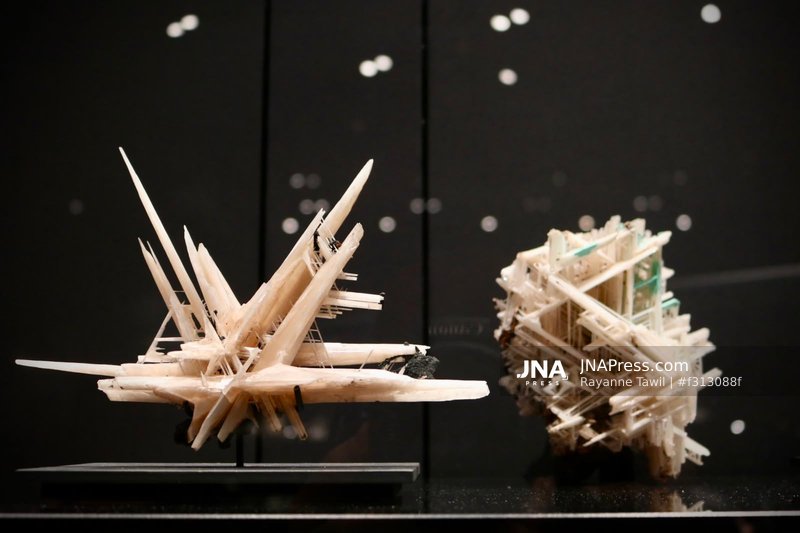
The contrast between museums became part of the evening's appeal. “There are people who love archaeology, others contemporary art, minerals or prehistory,” explained Samar Karam, Regional Director for North Lebanon at the Directorate General of Antiquities. “That diversity is what makes Museum Night special. Every museum tells a different story.”
For many visitors, it was their first experience. Lyn, a young visitor attending Museum Night for the first time, said she had missed last year's edition and wasn't going to let the opportunity pass again. “I've always wanted to experience it,” she said while waiting outside Beit Beirut. “I'm enjoying discovering museums I had never visited before. Everyone keeps recommending different places, so it feels as though every stop has something new to offer.”
Rana Khodor travelled from Tripoli with a group of friends specifically for the event. “It's an adventure,” she said with a smile. “Coming from Tripoli was worth it. We've been waiting for this all day, and the atmosphere is even better than I imagined.”
A night dedicated to the south
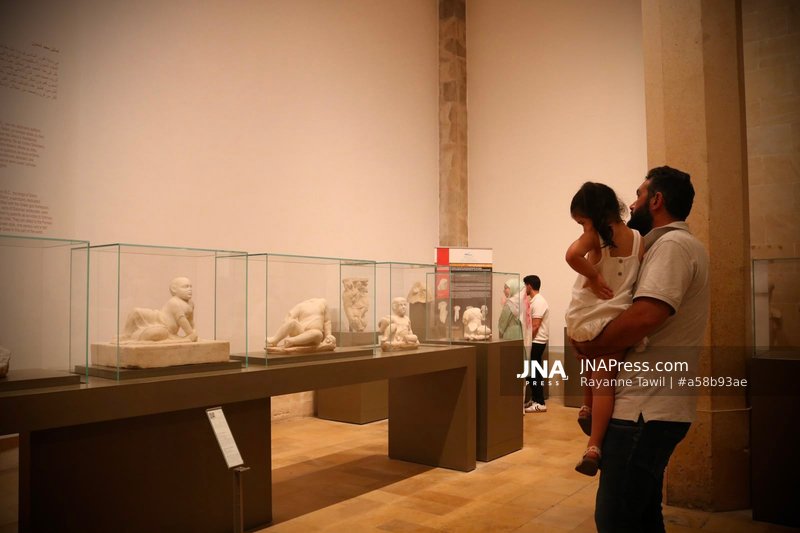
The longest lines formed outside the National Museum of Beirut. Guides welcomed people one after another, leading them through galleries filled with Phoenician sarcophagi, Roman mosaics and centuries-old items while highlighting newly displayed pieces transferred from southern Lebanon.
Last year’s Museum Night paid tribute to Ziad Rahbani, whose music seemed to echo all over a 3D light projection on the museum façade. This year felt different. There were no projections. No large celebrations. Instead, the focus shifted inward.
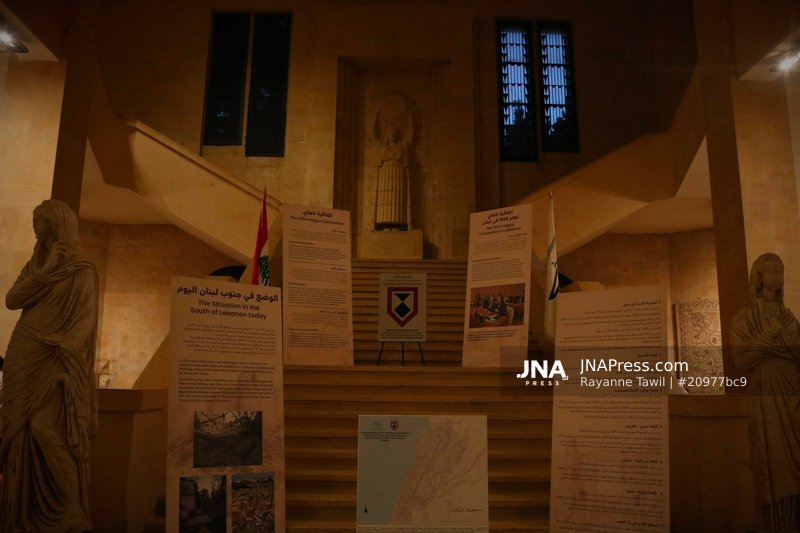
“The country is undergoing a war,” Choueiri said. “We wanted a more sober format. Rather than festivities, we focused on cultural content and heritage protection." Throughout the evening, archaeologists explained artefacts transferred from the south and spoke about ongoing efforts to safeguard endangered heritage. Karam said the decision reflected the country's current reality. “It had to be done,” she said. “Culture has to remain alive even when the situation is difficult. The National Museum is the guardian of our memory and our identity.”
Minister of Culture Ghassan Salameh echoed that message while addressing journalists outside the museum. “People came from all over Lebanon to discover the archaeology of their country,” he said. “Learning archaeology is the gateway to writing history correctly. History cannot be written without archaeology.”
He also pointed out the ministry’s recent work to document the damage to archaeological sites in southern Lebanon and then present those results to the international community, placing this year’s Museum Night inside a wider dialogue about safeguarding the country’s cultural heritage.
Songs between museums
The moment the next bus appeared, another race began. Passengers laughed before anyone had even found a seat. Some remained standing. Others squeezed together to make room for one more person. Then someone started singing. “Ya chauffeur ... daa’s Aa’l meye w tesa’a w tesa’in...” (come on, bus driver, press the pedal to 199). Within moments, half the bus had joined in.
The songs kept going as the bus rolled through Beirut toward Villa Audi where visitors wandered about a quieter architectural gem, built in 1921 and used as a home base for a striking mosaic collection that links Roman craftsmanship with Lebanon’s layered history.
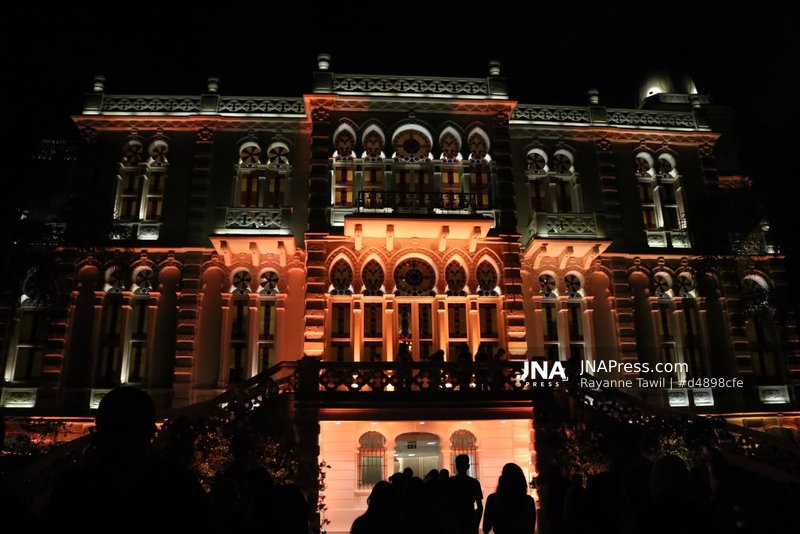
A short walk later, crowds reached the Sursock Museum, its illuminated façade welcoming another wave of visitors eager to experience its evening exhibitions and special screenings. Each stop revealed a different facet of Lebanese heritage: history, art, architecture, memory and science. No museum repeated the experience of the previous one.
One final stop
Among the evening's surprises was Lebanon’s Central Bank Museum, which opens to the public only on rare occasions. Visitors wandered through centuries of Lebanese currency alongside banknotes from Zimbabwe, Uruguay and dozens of other countries. Children competed over interactive puzzles that challenged them to reconstruct the Lebanese lira, the country’s national currency, while adults lined up for one irresistible attraction: attempting to lift a real gold bar.
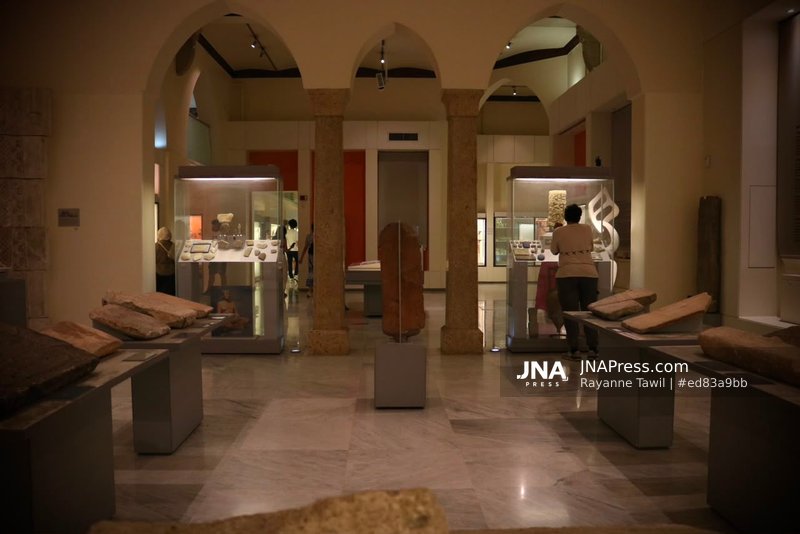
The final stop brought visitors inside the American University of Beirut's Archaeological Museum. Walking through AUB’s historic stone corridors felt like stepping into another chapter. Tiny fragments from Palmyra in Syria sat beside pieces tied to Jerusalem’s Dome of the Rock. Ancient sculptures and archaeological discoveries that traced civilizations across the region. The museum felt calmer, more academic than the evening’s earlier stops, rewarding visitors who stayed until the final hours.
By the time the last buses started their return journeys, no one seemed in a hurry to leave. And the strangers who had sprinted after a bus six hours earlier? Well, now they were exchanging Instagram accounts, sharing recommendations for museums they hadn't managed to see and promising to return next year. One ride had become dozens of conversations. One night had become thousands of shared memories. Some people came looking for museums. They left remembering the bus rides.
Photo and text by Rayanne Tawil/JNA Press

Rayanne Tawil
Author at JNA Press
Architect & culture journalist. I write about design, memory, and the ways places tell stories — whether through a building, a street, or a craft on the verge of disappearing.
View Profile