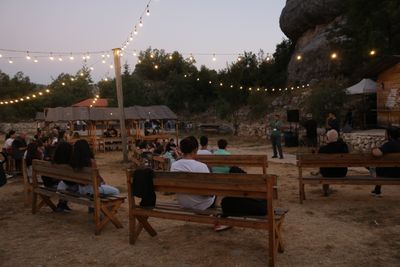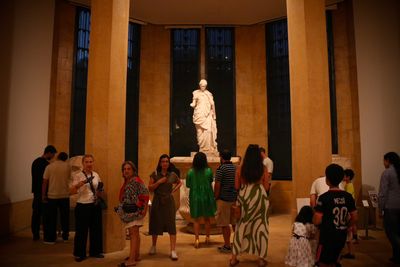


Beirut, Lebanon – Inside Beit Beirut, a relic and symbol for Lebanon's 15-year civil war that still bears the scars of that conflict, a new exhibition titled Hkeeli Ya Jnoub (Tell me, oh South), is on display documenting southern Lebanon's long history of conflict while preserving its memories and traditions.
Much of the top floor in the historic building was transformed into different rooms of a traditional southern Lebanese home. There is a bedroom, a living room, a kitchen and a study: all faithfully recreated down to the smallest details.
For Adeeb Farhat, a filmmaker, researcher and co-curator for the exhibit, these are the stories he would rather be telling as someone from the south.
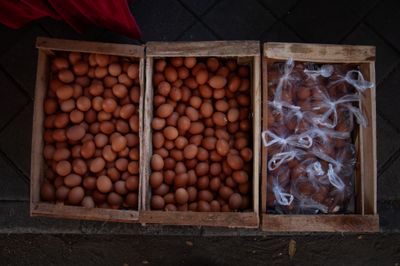
“My dream project is not to document war. I’d like to document other stuff from south Lebanon. We have the best food for example,” he told JNA Press. “Unfortunately, because of the war that was forced upon south Lebanon, the aggression, and the occupation that we have to face, this is what we have to work on because, right now, it is important to do so.”
Once upon a time in south Lebanon
While much of the exhibition focuses on the south's decades-long history of conflict and occupation, it remains deeply human, often exploring how these events and traumas affected ordinary people. Its goal is to document the region's history while also reflecting on ongoing realities.
According to Delphine Darmency, the co-creator and executive director of Hkeeli, this was what they aimed to do with the exhibition.
“This project bears witness to both the incredible beauty of the South and its inhabitants, the unbreakable bond between people and their land, the stories passed down from generation to generation, the traditions that give meaning to daily life, but also to the repetition of traumas and losses suffered. It helps us reflect on the present. It is an act of recognition of the immense loss that the South has endured for decades,” she told JNA Press.
Videos and audio recordings of people who lived through previous wars and occupations focus on their own personal experiences rather than seeking to represent the entire region.
Through Rawan Mazeh’s “Manufacturing Estrangement,” the artist explores the South’s attachment to its land while telling the story of one family in Khiam’s notorious detention center during the Israeli occupation of southern Lebanon in the 1980s and 1990s.
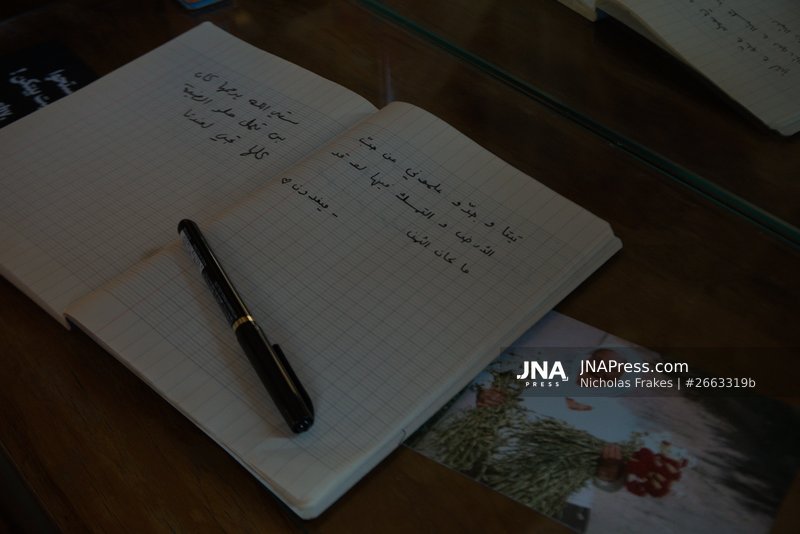
The installation displays handwritten letters from Hassan Saeed and Abda Malkani, a husband and wife who were among the oldest prisoners held in Khiam, to their son Muhammad through the Red Cross. These letters were repeatedly tampered with by the Israelis in an attempt to create tension between family members.
What was more important to Mazeh, though, was the message within those letters. “The thing that I see as connected to everyone in the South is that, if you read these messages, you see parents asking their children for clothes, telling them they miss them, describing how they were being tortured in prison,” she told JNA Press. “But, at the same time, they are asking about their land. How are the olive trees? How is the garden?”.
For the team behind the project, they recognized that the timing was sensitive given the ongoing occupation, continued attacks, and displacement of its residents. However, they also the exhibition was necessary.
The decision to create Hkeeli Ya Jnoub came just three weeks before its opening and was seen as the only possible response to the current situation.
In the end, six artists: Farhat, Mazeh, Rabab Chamseddine, Farah Berrou and Batoul Faour were brought together to curate the exhibit, with smaller contributions from Ali Mazrani, Antoine Kabbabe and Hassan Fakih.
Given the limited timeframe, the team acknowledged that they could not create an exhibition representing every voice. Instead, they chose to highlight a selection of voices from the South while creating space for others to share their stories.
“All of these stories that you hear from 20 or 30 years ago, you’re hearing them once more today. We have people in prison and we don’t know what’s happening to them. It’s the same as before,” Mazeh explains.
Since southern Lebanon has dominated public discourse since the start of the initial conflict on October 8, 2023, and has frequently appeared in international headlines, the artists say it has become even more essential to tell their own stories.
“It’s essential that we tell our own stories, especially when so much of our history and our experiences are discussed by others or erased,” Mazeh states. “Telling our own stories isn’t about claiming a single truth. It’s about speaking from lived experiences and preserving memories that might otherwise disappear. As someone from Sour in the South, my work comes from a place of belonging.”
Keys without doors
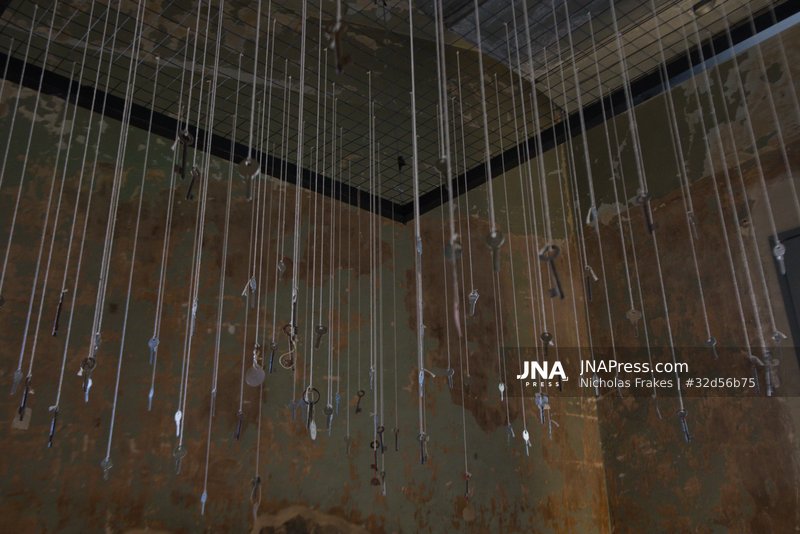
Hanging from the ceiling of a narrow corridor are dozens of keys of different shapes and sizes. They were part of an installation by Farhat for Hkeeli last year and carried over into this latest edition.
The keys represent the many residents who continue to hold on to the keys to homes they were forced to leave. Some were waiting to return after being displaced by the war. Others no longer have homes to return to after they were destroyed by Israeli bombs or demolitions.
It is a trauma passed on to the current generation by their parents, who received it from their parents, with this experience ultimately going back to the Palestinians who fled their homes during the establishment of Israel nearly 80 years ago.
But there is more than just one story and one experience for southern Lebanese. “It’s not an art exhibition. It’s not a classic museum of stories from the people to the people,” Farhat says. “Instead of having artwork, you have work filled with emotions and memories that can trigger feelings, remind you of experiences you lived or inspire your imagination.”
Near the entrance to Beit Beirut, there is a map of southern Lebanon covered with numerous photographs pinned to villages across the region. These images were sent by people from those villages as a way of preserving memories from these villages, some of which have been reduced to rubble.
In other parts of the exhibit there are journals scattered throughout, inviting visitors to write down their memories. All of this is to preserve culture and traditions from southern Lebanon. “I want people from the South to visit this exhibition and feel encouraged to share their stories and photos, and what happened to them. I want people who aren’t from the region to know more about the South,” Farhat declares.
The response to the exhibit has been overwhelming. Despite concerns that the timing was not appropriate, residents of southern Lebanon have embraced Hkeeli’s invitation to contribute their memories. According to Darmency, more than 3,500 people have visited the exhibition, with over 100 letters and 50 drawings submitted. The notebooks have also been filled with hundreds of personal stories.
Even as Hkeeli Ya Jnoub examines conflict and loss, southern Lebanese communities have made one message clear: they have a lot more to offer than simply war stories.
“The people of the South need to tell [their story]. I hope that if someone is far from this situation, they can understand the stories of the South. What we have gone through and what the region really wants to talk about,” Mazeh concludes.

Nicholas Frakes
Author at JNA Press
I am a journalist and photojournalist based in Lebanon covering the Middle East. I have worked in the region for nearly a decade and have covered everything from popular uprisings to economic crises to the recent wars in Lebanon.
View Profile