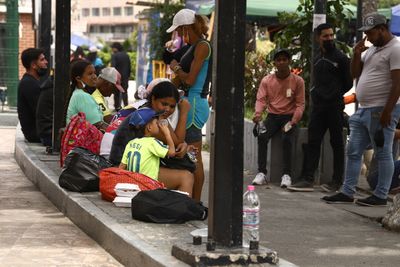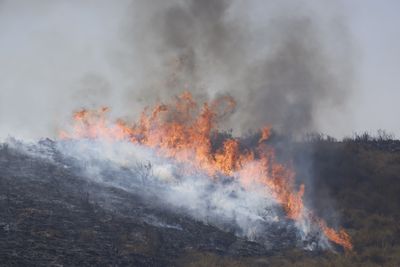


The South American country has been counting 56 days since the double earthquake that significantly affected its northern region, while the death toll stands at 6,438. The natural disaster, which affected six regions of Venezuela, left 86,358 injured and damaged 41,624 structures, 190 of which suffered total collapse, according to figures released by the government led by Delcy Rodríguez, as of August 3.
A total of 59,342 buildings across the country have been inspected by the government commission responsible for assessing structures in the areas affected by the seismic event. The effort involved the deployment of 560 specialized engineers.
"There are already guidelines for repairing structures that have suffered damage to the masonry and non-structural elements, as well as guidelines for repairing structural elements with moderate or minor damage to reinforced concrete elements," said Francisco Garcés, Minister of Transportation and representative of the Venezuelan Government in the area.
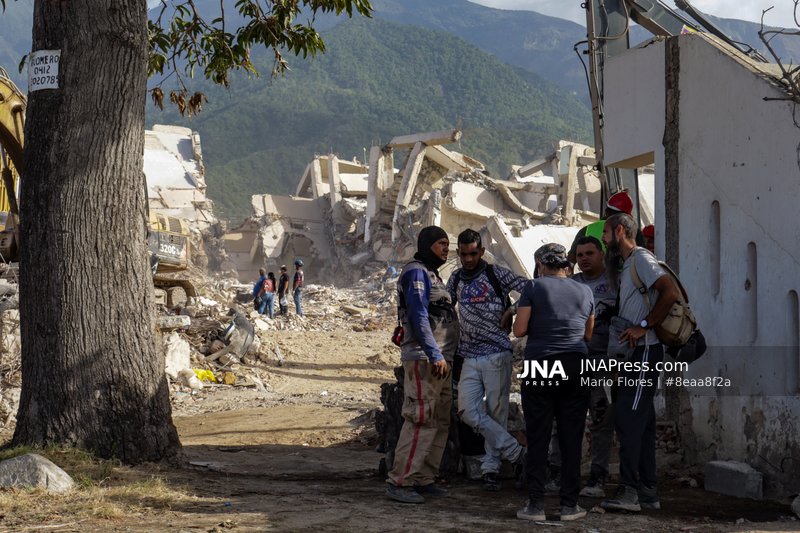
In La Guaira, the hardest-hit province, rescuers, volunteers, and family members continue searching for bodies under the rubble and collapsed structures. Urbanizations such as Caraballeda, Playa Grande, Los Corales, Tanaguarena, and Catia La Mar report that more than 400 people are involved in body-recovery efforts every day.
Meanwhile, more than a hundred structures where rescue operations have concluded have been completely cleared of debris and concrete, leaving behind empty and desolate plots where homes and commercial establishments once stood, serving the tourism industry and the daily life of the country's main coastal region.
The governor of La Guaira, José Alejandro Terán, reiterated that the use of the beaches remains restricted, considering that the current conditions of some affected areas do not allow, for now, their operation as tourist spaces.
During a press statement, Terán noted that the measure responds to the conditions in which parishes such as Macuto and Caraballeda find themselves following the recent events, which caused extensive damage and numerous fatalities.
"This is done in obedience to reason. A state that is devastated in the Macuto area, where so many people died, where there are so many buildings in ruins, and in Caraballeda, ground zero, I don't see a tourist area there in the short term," said the regional leader.
Negotiations between the Government and the Opposition continue
While the debris removal and reconstruction efforts continue in the devastated areas, Venezuela's political activity has not stopped. On August 12, opposition and Chavismo representatives met face-to-face to participate in a negotiating process announced by the United States Government. The Venezuelan government delegation was led by Jorge Rodríguez, brother of the current president Delcy Rodríguez, while the opposition was represented by Dinorah Figuera, a former member of the National Assembly elected in 2015.
The meeting addressed issues related to the response to the emergency caused by the double earthquake. The parties also agreed to seek the release of Venezuelan resources currently blocked at the Bank of England, as well as to strengthen democracy, the Judiciary, and the electoral authorities.
The agreements represent significant progress toward the release of political prisoners and changes in the leadership of the National Electoral Council and the Supreme Court of Justice. Regarding the first of these measures, 131 people detained for political reasons and imprisoned under the government of Nicolás Maduro between 2024 and the end of 2025 have reportedly been released.

José Mireles Alcalá
Author at JNA Press
Venezuelan journalist specializing in politics, economics, and social impact, based in Caracas, Venezuela.
View Profile