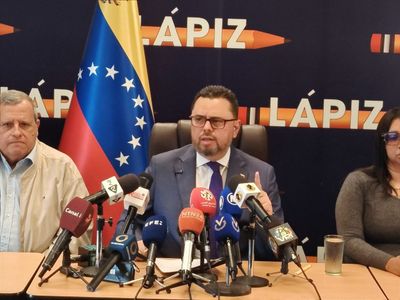


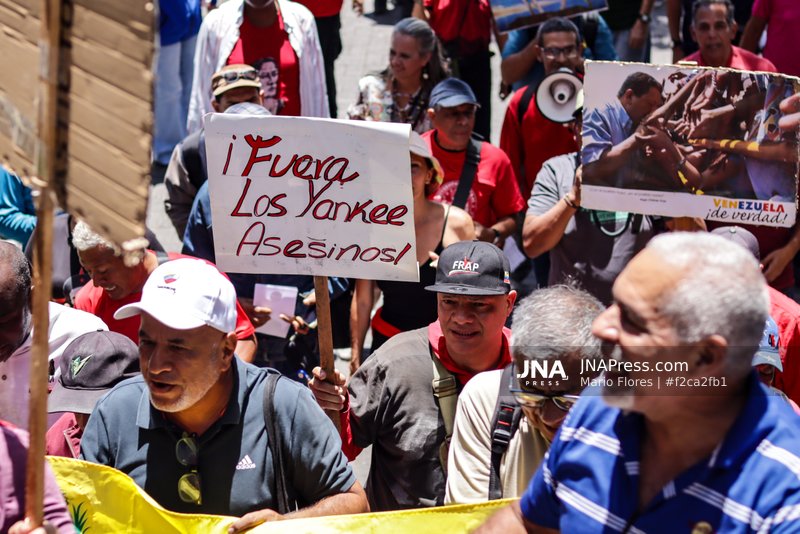
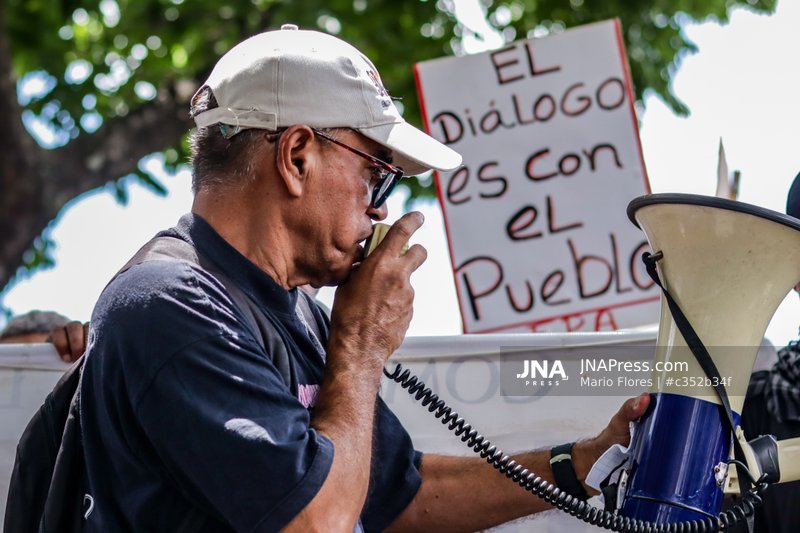
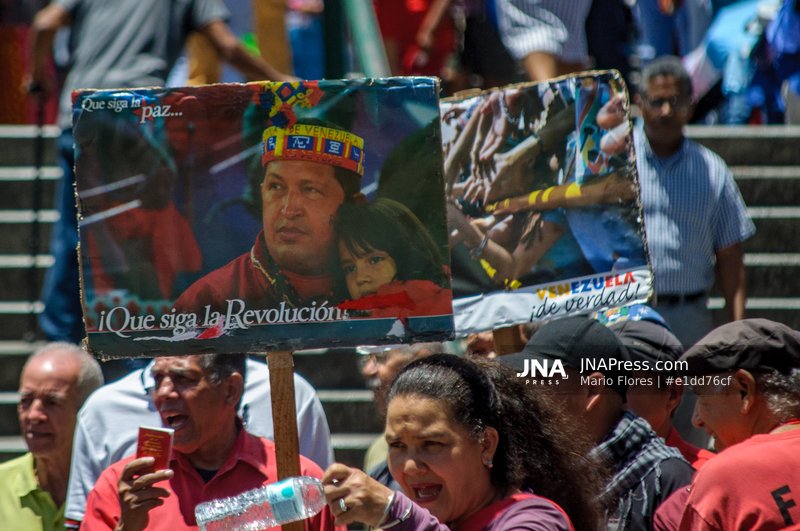
A group of anti-imperialist protesters linked to the original chavismo and social movements of the Anti-Imperialist Popular Front (FPA) mobilized through the center of Caracas, the capital of Venezuela, to reject the terms of the oil agreement between the United States and the South American country, demanding that its details be made public and a popular consultation be called to discuss the matter.
Carrying copies of the Venezuelan Constitution and slogans in defense of national sovereignty, people marched through the city center denouncing both the opacity of international energy agreements and the progressive removal of symbols and images of former President Hugo Chávez and Simón Bolívar in official buildings.
"I am unaware of the content of that agreement. I don't know how that agreement can benefit the Venezuelan people. Will that agreement benefit the workers? Will it benefit the hundreds of hospitals that are understocked? Will it benefit schools and high schools? "Will it benefit the earthquake victims?" said Oswaldo Rivero, a communication activist of Chavismo, while participating in the protest.
The protest denounced what they consider an aggression by President Donald Trump, the economic intervention in the nation, while also repudiating the "Zionist" presence they believe is represented by Israeli officials in Venezuela.
The largest oil deal in history
This Friday, it was announced that an agreement was signed between the United States (US) and Venezuela for the exploitation of oil in 17 Venezuelan fields, which would encompass more than 65 billion barrels of proven reserves. The news was described by Donald Trump and Delcy Rodríguez as a "historic agreement" that grants the North American country majority control of the crude oil for decades.
"At my direction, Secretary of State Marco Rubio and Secretary of War Pete Hegseth, working closely with the highly respected President of Venezuela, Delcy Rodríguez, and through a partnership with private companies, have secured U.S. majority control of over 65 billion barrels of proven oil reserves in Venezuela, at no cost to the American taxpayer," Trump wrote.
Approval from Delcy Rodríguez
For her part, interim President Delcy Rodríguez has announced that the agreement encompasses 17 strategic fields, with an investment of more than 100 billion dollars and over 209 billion dollars in taxes for the State.
"These investments will contribute not only to the recovery and modernization of our industry but also to the economic growth of our country, the energy security of our hemisphere, and a greater balance in international markets," the document states.
Venezuela has 303.221 billion barrels of proven (certified) oil reserves, placing the country in first place worldwide. The duration of these reserves depends exclusively on the daily extraction rate and the level of demand/consumption.
With the current production (around 850,000 - 900,000 barrels per day): They would last more than 900 to 1,000 years. If Venezuela were to recover a high level of production (3 million barrels per day): They would last approximately 270 to 300 years. Considering only the country's internal consumption: They would cover local needs for more than 3,500 years.

José Mireles Alcalá
Author at JNA Press
Venezuelan journalist specializing in politics, economics, and social impact, based in Caracas, Venezuela.
View Profile