

La Guaira, Venezuela- The situation on the streets of La Guaira remains challenging following the recent earthquake that struck Venezuela's central coast. Yet, amid the dust of collapsed buildings and the uncertainty faced by families who lost everything, the aroma of hot meals has emerged as a symbol of hope.
At the centre of this fight against hunger is the international humanitarian organization World Central Kitchen (WCK), which has launched one of its largest emergency operations in the region, serving vulnerable communities along the central coast and in parts of Caracas.
The organization has achieved a titanic feat, distributing an average of 50,000 to 60,000 meals daily. To carry out this monumental task, the organization relies on key partners from the local gastronomy sector. One of the pillars of this operation on the ground is El Negro Street Food, a food service subsidiary dedicated entirely to logistics and food production in extreme situations.
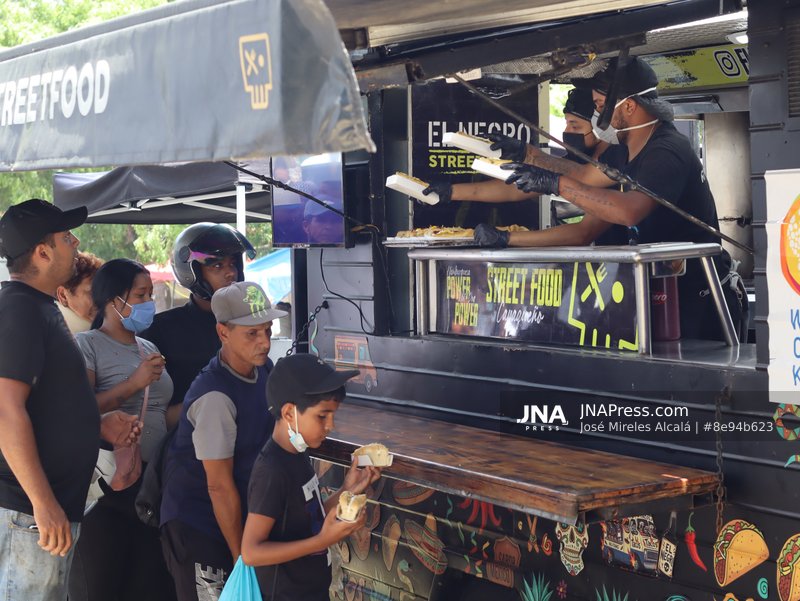
Ernesto Sánchez, one of the company's representatives, describes the operation with the precision of someone living through the emergency minute by minute. "We are a food service company dedicated to handling all the logistics, production, preparation, and creation of meals. We are here working together with World Central Kitchen. Our main focus, and all of our efforts, are here in La Guaira, assisting displaced refugees and the most affected sectors," said Sánchez while overseeing the preparation of hot dogs for lunch distribution to survivors in the town of Playa Grande.
A logistics operation that never stops
The distribution strategy stands out for its mobility and speed of response. The team does not wait for affected people to move, but instead brings mobile kitchens directly into the communities.
"Our role is to arrive with our food truck, set up, prepare the food on-site so people can eat it hot, and serve everyone without distinction, because this food is completely free. Anyone who needs a meal comes here, and we serve them. That is our daily task," Sánchez explains.
The pace of work is grueling and demands an absolute commitment that defies conventional schedules. Although the workday in the field now begins a little later, after 7 a.m., the first weeks following the disaster required superhuman effort.
"Fifteen days ago, when the service also included breakfast, we had to come down from Caracas between 4:30 and 5:00 in the morning to prepare 2,500 breakfasts in just three hours. Our main asset is our team, a group that works from dawn until dusk. They are the machinery and the true engine of our company," Sánchez emphasized.
Structure, science, and food safety
Behind every meal served is a meticulous organizational system designed by WCK, where every team member has a clearly defined role in production, logistics, or distribution. The selection of delivery points is based on continuous assessments of the areas with the greatest needs.
The NGO assesses the affected areas to identify those with the greatest need. According to that assessment, they send the number of food trucks and food stations needed to serve specific areas, especially the higher parts of neighborhoods where access is more difficult.
To ensure the fast service without losing quality, the operation is divided into two geographic phases. Ingredients are initially processed in Caracas before being transported to the coast, where they receive the final preparation before being served.
"We have a production center in Caracas where everything is packed, stored, cut, and pre-prepared according to the daily menu. Here in La Guaira, we give it the final touch: heat, sauces, and everything needed to deliver the product directly into each person's hand," said the representative of El Negro Street Food.
This menu is not improvised: it is rigorously designed by specialists to prevent any public health risks in disaster areas, where refrigeration is often unavailable.
"It's a varied menu that is strictly supervised by nutritionists from World Central Kitchen, who have many years of international experience. They provide us with clear guidelines on prohibited ingredients: no dairy, eggs, or foods that spoil quickly or accelerate fermentation, such as tomatoes. This is vital because the food sometimes has to travel and may not be consumed immediately. We follow strict standards for portion sizes, hygiene, and food handling all the way through the final delivery", added Sánchez.
The human footprint of the hospitality industry
"The impact of the tragedy has generated an unprecedented mobilization in the gastronomic sector of Caracas, which has set aside commercial differences to unite under a common humanitarian cause", analyzed Sánchez, who said he has been deeply moved by the response of his colleagues. "All of us who Caracas' restaurant community made ourselves available and came here to help without any profit motive. It has been an immense contribution from an industry that understood that thousands of people have lost everything and need us", he added.
Reflecting on the long days spent working over hot stoves under the coastal sun, Sánchez said the experience has left him with mixed emotions.
"What do I take away from all this? On one hand, a lot of sadness after seeing the reality these people are facing. On the other hand, enormous satisfaction in knowing that we were able to help using the tools we have. We are here with enthusiasm, a lot of spirit, and above all, with the will and strength to continue supporting those who need it most," concluded Sánchez as he prepared for another shift.

José Mireles Alcalá
Author at JNA Press
Venezuelan journalist specializing in politics, economics, and social impact, based in Caracas, Venezuela.
View Profile