
Western Sahara’s Forgotten Conflict: Polisario Leader Visits Sahrawi Refugees in Algeria
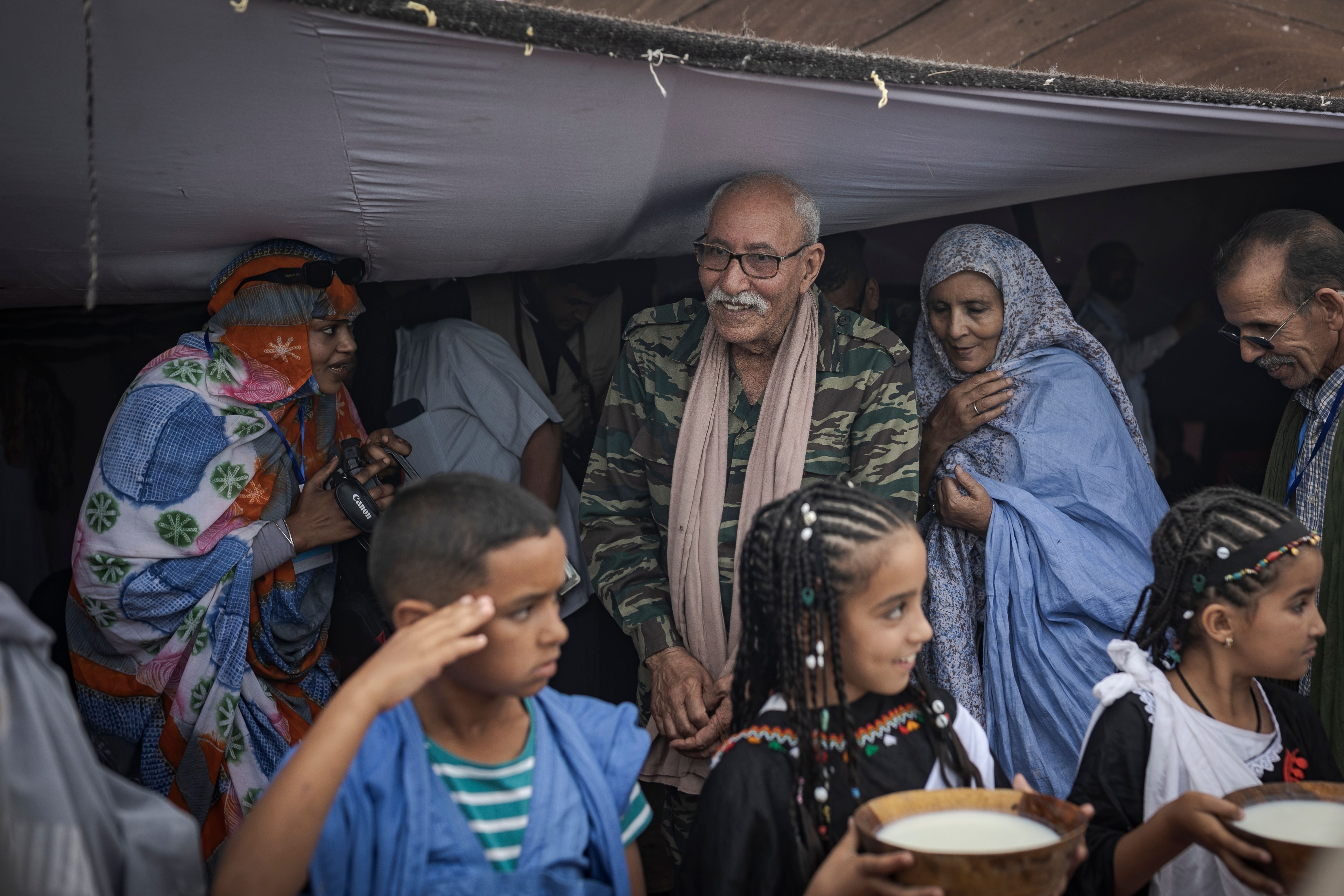
Western Sahara’s Forgotten Conflict Returns to View as Polisario Leader Visits Sahrawi Refugee Camp in Algeria
AUSERD REFUGEE CAMP, TINDOUF REGION, ALGERIA — MAY 2026
Brahim Ghali, President of the Sahrawi Arab Democratic Republic and Secretary-General of the Polisario Front, visited the Sahrawi refugee camp of Auserd in Algeria’s Tindouf region, highlighting one of Africa’s longest-running and least-resolved political and humanitarian crises.
The visit took place inside a network of camps that have hosted Sahrawi refugees for nearly five decades. For many residents, life in exile has become a permanent reality shaped by displacement, political uncertainty, humanitarian dependency, and the unresolved future of Western Sahara.
The Western Sahara dispute dates back to the mid-1970s, after Spain withdrew from the territory. Morocco considers Western Sahara part of its sovereign territory, while the Polisario Front demands independence and represents the Sahrawi Arab Democratic Republic, a self-declared state recognized by some countries and supported politically by Algeria.
Since then, tens of thousands of Sahrawis have lived in refugee camps near Tindouf, in southwestern Algeria. The camps including Auserd have developed into semi-permanent communities with schools, local administrations, social structures, and political institutions. Yet their existence remains tied to a conflict that has not reached a final settlement.
Ghali’s visit carried both symbolic and political weight. By appearing among refugees, community leaders, and camp residents, the Polisario leadership sought to reaffirm its connection to the Sahrawi population in exile and to keep international attention on a cause that has often been overshadowed by other global crises.
For the Sahrawi refugees, the camps are not only places of displacement. They are also the center of a national identity built around memory, resistance, and the demand for self-determination. Generations have been born and raised there without ever living in Western Sahara itself.
The United Nations has been involved in the conflict for decades through MINURSO, the UN peacekeeping mission established in 1991 to monitor the ceasefire and support a political process. However, the promised referendum on self-determination has never taken place, and negotiations have repeatedly stalled.
In recent years, the diplomatic landscape has shifted. Morocco has promoted an autonomy plan that would keep Western Sahara under Moroccan sovereignty while granting the territory self-governance. The Polisario Front rejects this framework as insufficient and continues to demand a referendum that includes the option of independence.
The issue remains deeply tied to regional politics. Algeria supports the Polisario Front and hosts the refugee camps, while Morocco has gained growing diplomatic support for its autonomy proposal from several countries. The dispute has also contributed to long-standing tensions between Algeria and Morocco.
Beyond diplomacy, the humanitarian situation remains urgent. International agencies continue to provide food, health care, education, and basic services to Sahrawi refugees in the Tindouf camps. Aid organizations have repeatedly warned that funding shortages, climate pressures, and prolonged displacement continue to affect daily life in the camps.
The image of Ghali interacting with residents in Auserd reflects more than a political visit. It captures a conflict suspended between diplomacy and exile, between a leadership seeking international recognition and a refugee population still waiting for a final answer about its future.
Nearly 50 years after the beginning of the Western Sahara conflict, the Sahrawi refugee camps remain a powerful reminder of a crisis that has endured across generations largely outside the world’s daily headlines.
Photo: Jairo Vargas Martin / JNA Press